Edit Numbers in Image
Box a number in your image, type the new one — font, decimals and currency symbols stay put
Examples
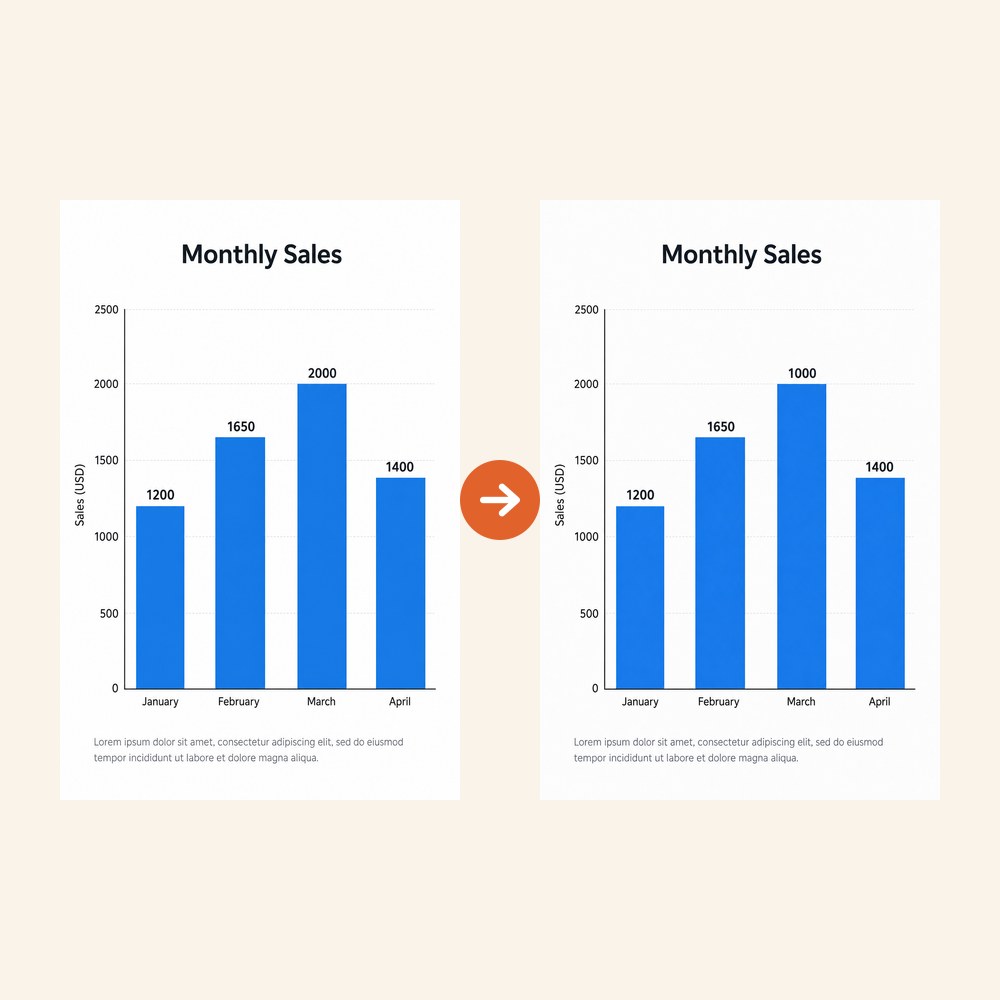 Chart figure: 2,000 → 1,000 (bars and colors untouched)
 Event date: June 18 → Aug 18
What can you change with it?
Prices are the classic case. A restaurant updates its menu twice a year but the designer who made it is long gone; a shop reprints price tags for every promotion; an online seller reuses one product banner across seasons. Box the old price, type the new one, and the finished design keeps working — no source file, no Photoshop, no tracking anyone down.
Event posters, sale banners and countdown graphics usually expire because of one number: the date. Change June 18 to Aug 18 and the same poster runs again — typography, background and layout survive untouched.
Report and presentation graphics are another frequent one: the chart image in a business report says 2,000 but the corrected figure is 1,000, and the original spreadsheet is nowhere to be found. Box the printed label and fix it — bars, colors and gridlines stay put. (For data-driven redrawing, go back to a charting tool; this edits the printed digits.)
Discount percentages, stock counts, phone numbers, house numbers, jersey numbers — if it's digits printed on an image you own, the same box-and-retype flow applies.
How it works
- Upload the image — price tag, menu, poster, chart or screenshot (PNG, JPG or WebP).
- Draw a box around the number you want to change, slightly larger than the digits themselves.
- Type the new value (e.g. "Change $29.99 to $19.99") and generate. The result keeps the original image size; download it as PNG.
What images work best
- Flat graphics are the most reliable: menus, posters, price tags, charts, app and website screenshots.
- Photos also work when the digits are clearly legible — a storefront sign, a product label, a jersey. Perspective and lighting are matched automatically.
- One number per edit gives the cleanest result; for a whole menu, download the result and edit the next spot.
- If the font matters, say so: adding "keep the same font and color" to the instruction removes ambiguity.
- Very tiny or blurry digits (dense tables, low-res screenshots) may lose fidelity — use the highest-resolution original you have.